

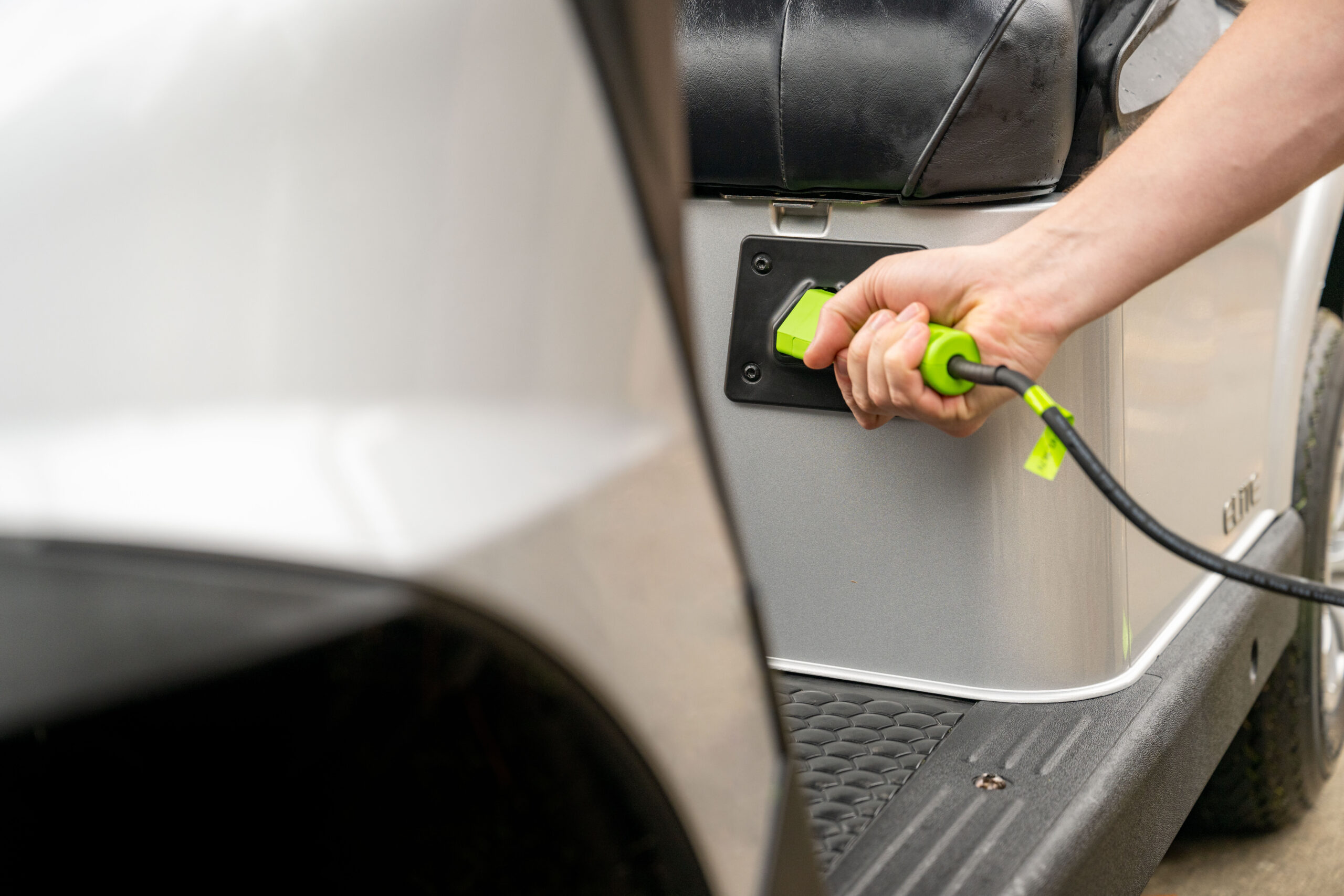
When golfers step onto the course, they expect smooth performance from their buggy from the first tee to the 18th green. Yet for many clubs, staff, and golfers, the gradual fade in buggy performance over a round is all too familiar. Understanding why this happens and how battery choice impacts it is key to improving the course experience.
Consistent power delivery vs gradual performance fade.
Lead-acid batteries are notorious for a gradual voltage drop during use. Early in the day, the vehicle may feel powerful, smooth, and responsive. By the 12th or 13th hole, however, the same buggy can start to feel sluggish, especially under load or on hills. This isn’t the driver’s imagination; it’s a fundamental limitation of lead acid chemistry. As voltage drops, the battery cannot sustain the same power output, resulting in:
• Slower acceleration
• Reduced hill-climbing ability
• Less responsive handling
By contrast, lithium batteries maintain a stable voltage throughout the discharge cycle. This means a buggy equipped with lithium power feels just as powerful at the 18th hole as it did at the first.
Why do some vehicles feel sluggish as the day goes on?
The performance fade of lead-acid batteries is magnified when vehicles carry additional weight. Golf buggies often have:
• Extra passengers
• Coolers or food and beverage carts
• GPS units, lights, or upgraded accessories
Each additional load increases the demand on the battery. As lead-acid cells discharge, their voltage drops further, and the buggy feels slower. Golfers and staff often interpret this as “the vehicle is weak,” when in fact the battery is struggling to maintain consistent output under load.

How voltage drop affects acceleration, hill climbing and accessories.
Voltage drop isn’t just about speed; it directly affects overall performance:
1. Acceleration: A fully charged lead-acid battery can launch a buggy effectively. As the voltage decreases, acceleration slows, making overtaking or merging on paths more sluggish.
2. Hill Climbing: Inclines magnify the voltage drop effect. Lead-acid vehicles may struggle on steep sections, particularly when loaded with additional passengers or equipment.
3. Accessory Load: Lights, GPS, heaters, or fans draw extra current. As lead-acid batteries discharge, these accessories can further reduce available power, compounding sluggishness.
Lithium batteries, with their flat voltage profile, sustain maximum power output regardless of load or state of charge.
The result: Consistent speed, reliable hill-climbing, and smoother operation for accessories throughout the round.
Why users blame the vehicle, not the battery.
It’s easy to assume a sluggish buggy is a mechanical problem, such as a worn motor, heavy steering, or brakes. But in most cases, the real culprit is the battery. Lead acid voltage sag affects:
• Driver perception of responsiveness
• Ability to maintain course pace
• Overall confidence in the vehicle
By switching to lithium batteries, clubs can eliminate this variable, ensuring that performance issues are truly mechanical if they occur, not an unavoidable side effect of a fading battery.
The bottom line: Efficiency meets reliability.
Consistent power output isn’t just a technical benefit; it has a real impact on course operations and player satisfaction:
• Golfers experience reliable speed and handling from start to finish
• Staff spend less time addressing complaints about “slow buggies”
• Extra accessories don’t compromise performance
• Clubs can optimise rounds and pace-of-play, even on heavily loaded courses
Switching to lithium is not just about battery life or maintenance; it’s about consistent, efficient, and dependable power that improves the experience for every user.
At Golf Car UK, we help clubs upgrade their fleets with lithium power solutions that deliver better performance, lower maintenance, and happier golfers, hole after hole.